

230 million people ask ChatGPT about symptoms, medications, and test results every week. Seven in ten of these conversations reportedly happen outside clinic hours. This week, OpenAI released ChatGPT Health—a dedicated product for health-related conversations.
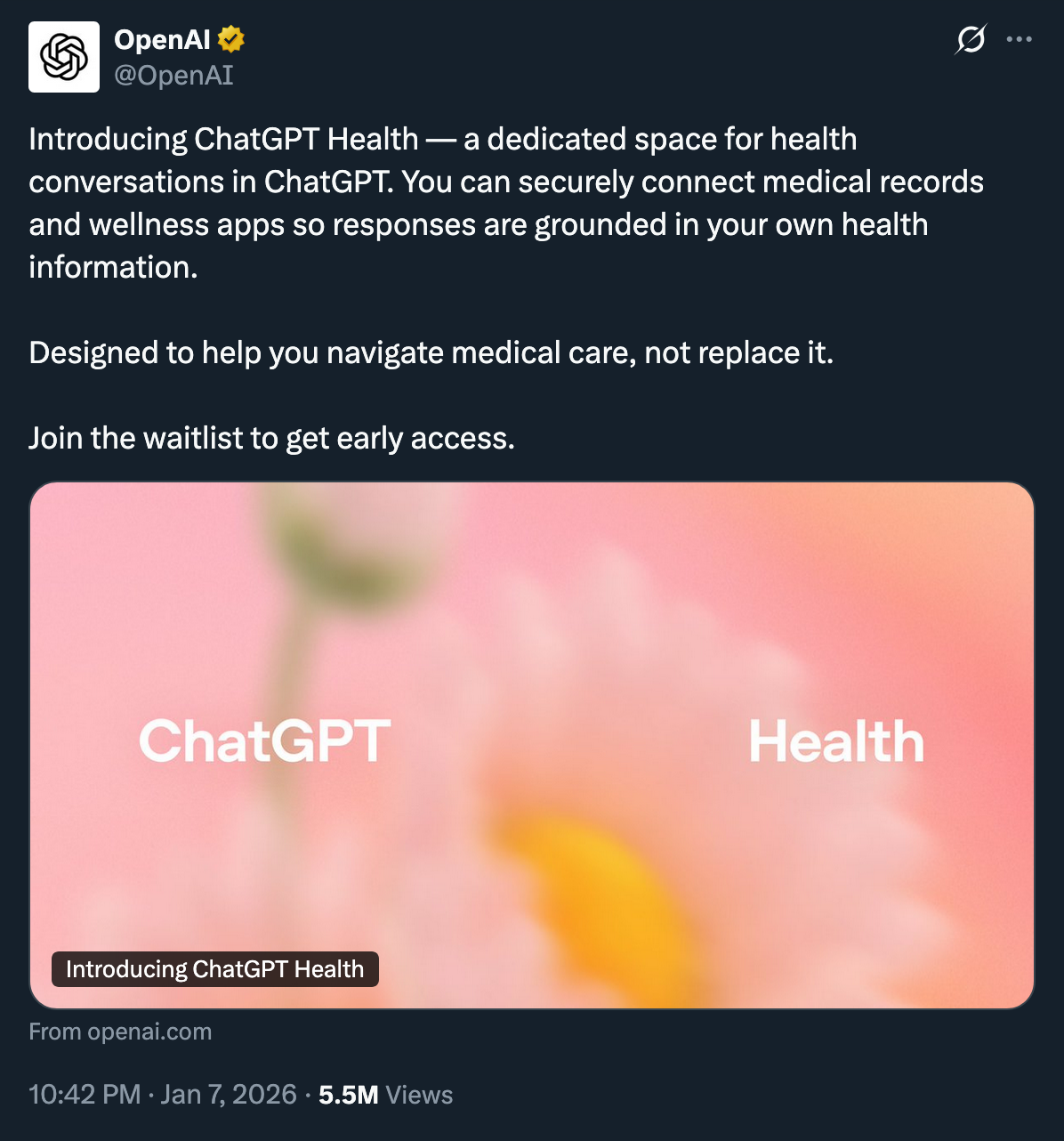
The product has its own memory, separate chat history, and additional encryption. Users can connect medical records through b.well (2.2 million U.S. providers) and wellness apps like Apple Health, MyFitnessPal, or Peloton—though for now, medical record integration is U.S. only, and access remains limited to a beta group.
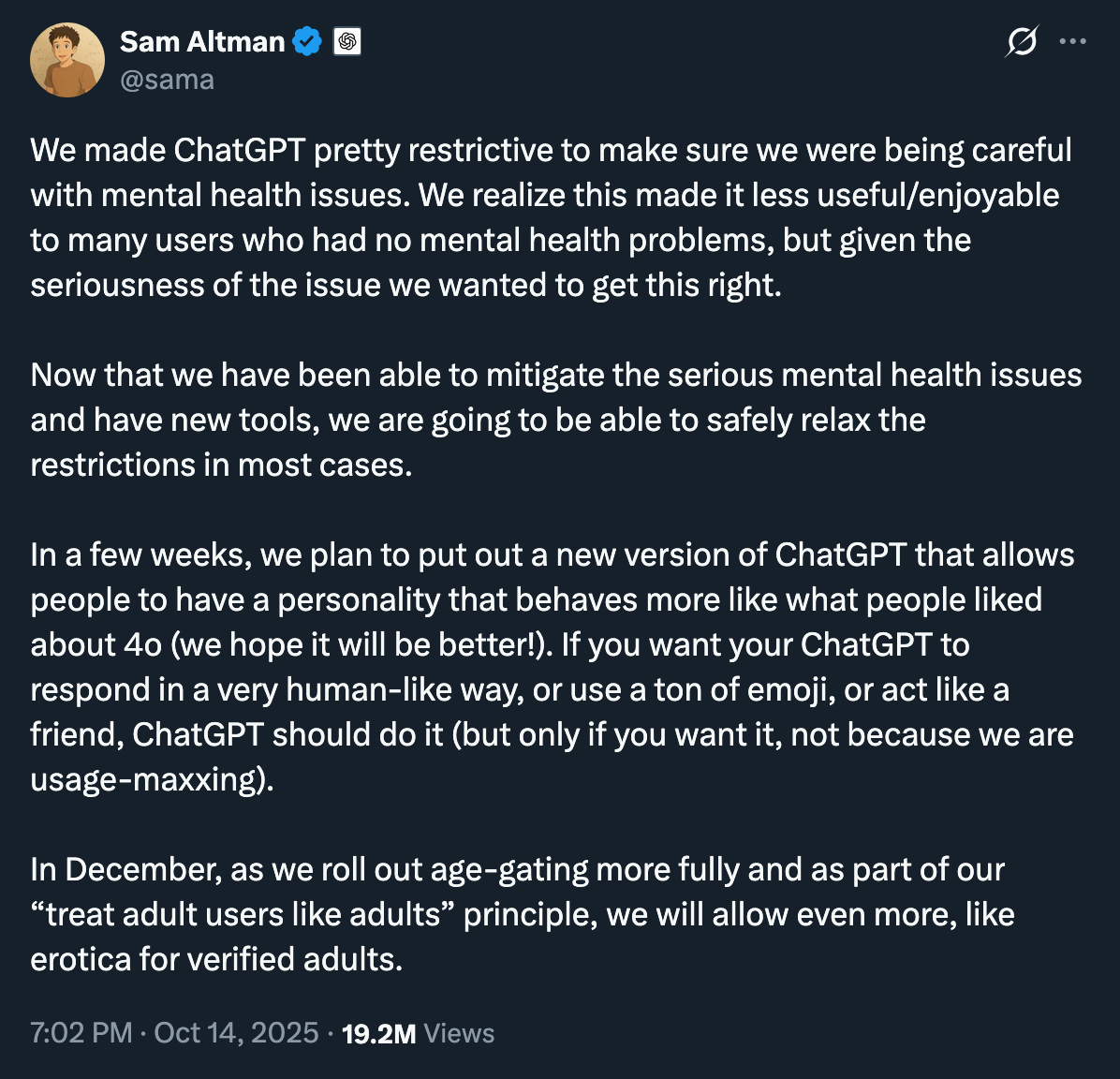
"Not intended for diagnosis or treatment," the company states in its disclaimer. Of course. But something else happened that same week.
Utah: AI Writes Prescriptions
Utah became the first U.S. state where an AI system can independently approve prescription renewals. Startup Doctronic built a system that asks patients clinical questions and, if everything checks out, sends the prescription directly to a pharmacy—no doctor involved.
The program covers 190 medications: blood pressure drugs, contraceptives, antidepressants. Painkillers and ADHD medications are excluded. In testing across 500 urgent care cases, AI decisions matched physician decisions 99% of the time. Complex cases get referred to humans.
"It's hard to get a renewal—if you have a chronic condition and you can't get your medication, terrible things happen," says Matt Pavelle, co-founder of Doctronic. The company charges $4 per prescription renewal and is already in talks with Texas, Arizona, and Missouri.
"Now we're in this weird place where there are devices—maybe you could call them devices—that are purporting to practice medicine," notes Zack Boyd, director of Utah's AI policy office. "Our philosophy has been to just take care of our side—of the state's authority—and the FDA is going to figure out what it's going to figure out."
Meanwhile, the FDA announced at CES that it's easing oversight of AI health devices. Commissioner Marty Makary: The agency needs to move "at Silicon Valley speed."
Why Now
That is, in a single week, OpenAI launched a specialized health product, Utah allowed AI to write prescriptions, and the FDA pulled back from regulating clinical AI tools.
For those following the space, none of this is particularly surprising.
"We do not have the people, the labor to deliver the care we should," says Jesse Ehrenfeld, chief medical officer at Aidoc, at CES. "The only way out of this mess is digital and AI."
As healthcare costs climb, inequality in access grows with them. In underserved rural U.S. areas, users send ChatGPT nearly 600,000 health-related messages weekly.
OpenAI plans to expand ChatGPT Health to India, Brazil, Mexico, and the Philippines—markets where, as Rest of World notes, "overburdened health-care systems and unequal access to doctors are leading more people to turn to generative AI for guidance."
For many, AI may not match a doctor—but it beats having no care at all.
Advisory to Prescriptive
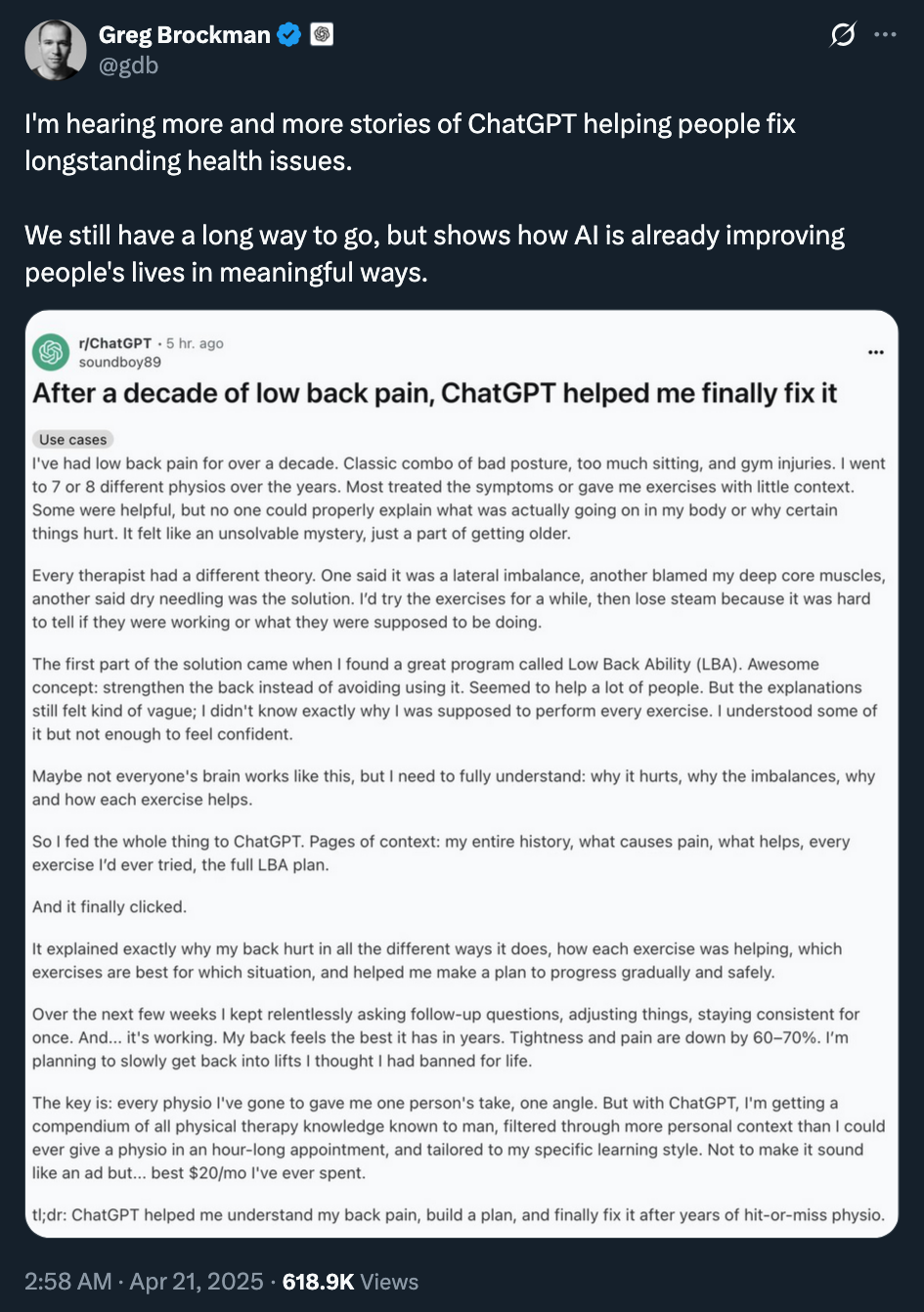
The shift is already happening—from providing information to making decisions. ChatGPT Health stays on the advisory side, helping users understand, prepare, and evaluate their options. Doctronic crosses the line: it makes decisions that affect the body. Both are moving in the same direction: basic health guidance is becoming more accessible, with human experts reserved for complex cases. Legal protections on the advisory side are minimal: HIPAA, the U.S. law that protects medical data, doesn't cover consumer products like ChatGPT Health.
The 230 million people asking ChatGPT health questions every week already knew AI healthcare was here. Now it's official.