
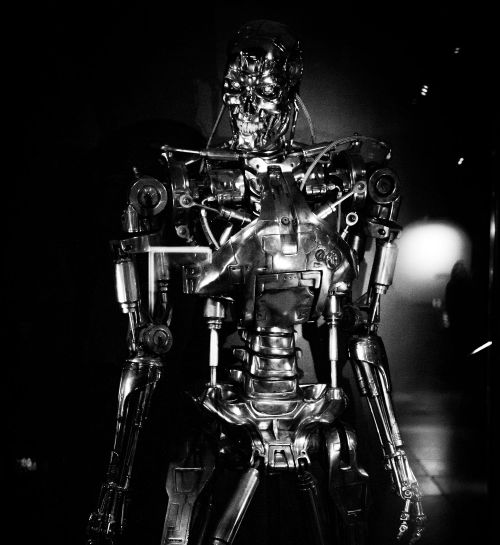
Foundation says its Phantom robot is already in trials with US and Ukrainian forces, but the current model can't get up after a fall and experts say a working robot soldier is more than a decade off.
Foundation, a two-year-old robotics startup, says the Ukrainian military is already testing its Phantom humanoid robots with weaponisation part of the trial, and that it will begin giving the machines lethal capabilities within months — though chief executive Sankaet Pathak declined to specify which weapons systems the company is developing.
The startup is backed by Eric Trump, an investor and son of the US president. Foundation says it is the only US company building humanoid robots aimed specifically at a broad range of military uses.
Two of the robots are with Ukrainian forces, Pathak says, while a US military pilot is limited to handling weapons rather than firing them.
That pitch runs ahead of the hardware. The current first-generation Phantom MK-1 has no battery, is neither dust- nor waterproof, cannot get back up if it falls, and has weak hands and no proper wrists. Pathak says a planned second generation, the MK-2, would add a battery giving about six hours of runtime, the ability to right itself after a fall, and protection against dust and water — capabilities of a model that has not been built.
Outside specialists are doubtful a functioning robot soldier is near, seeing fully autonomous versions as at best a long way off. MIT professor emeritus Rodney Brooks, a robotics pioneer, says humanoids will likely need more than a decade before they work reliably in complex, unfamiliar settings, and that moving from a successful lab demonstration to a first real-world deployment typically takes at least another ten years. Robert Griffin of IHMC says it remains uncertain whether Foundation can engineer hands able to operate a weapon made for human hands, calling it an extraordinarily tough problem.
Ethical opponents object to the whole idea. Nicole van Rooijen, executive director of the Stop Killer Robots coalition, argues that lethal autonomous weapons of any kind lower the threshold for going to war, strip conflict of its human dimension, and make it harder to assign responsibility.
Pathak dismisses such fears as greatly overblown. He says humans should stay in the loop to sign off on any lethal force before a robot acts — while allowing for exceptions in which a system might fire on its own to head off a catastrophic outcome.