
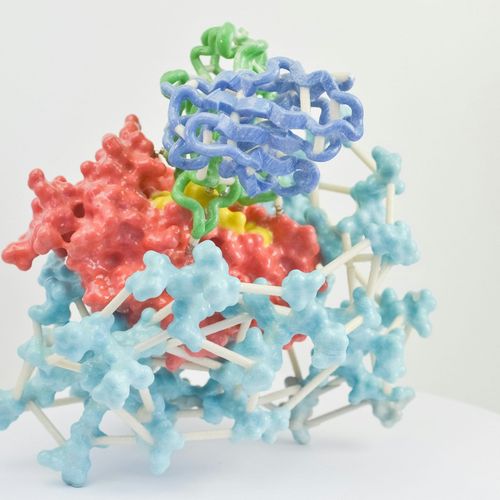
The switch, a protein called Avl9, comes from a family long thought to act as on switches, and the findings suggest some of its members do the opposite.
A Cornell lab led by molecular biologist Chris Fromme has found a previously unknown way cells control how proteins move around inside them, with artificial intelligence narrowing the search. That traffic underlies how cells grow, signal and move, and cancer often throws it off. In a paper published September 9 in the Journal of Cell Biology, the team reports that Avl9, a protein scientists knew little about, acts as an off switch for Arf1, which directs cargo to its destinations inside the cell.
Arf1 has to be shut off at the right moment, or the cell loses its orderly layout. It takes part in so many essential processes that researchers expected more proteins to be keeping it in check.
To find partners nobody had identified yet, the team ran AlphaFold, software that predicts the shapes of proteins and how they might fit together. Screening at the bench can take months; AlphaFold quickly cut the field down to a short list of likely interactions that could go straight to experiments.
That list singled out Avl9, which earlier work had linked to secretion and to the movement of cancer cells without ever working out what it did. Lab experiments showed that Avl9 switches Arf1 off. Ryan Vignogna, a postdoctoral researcher and the study’s first author, said its amino acid makeup had suggested the reverse. A single amino acid change was enough to disable the switch, and human lung cancer cells carrying the mutation migrated less well, tying the protein’s molecular job to a behavior that matters in cancer.
The team then looked for more off switches among Avl9’s relatives, the DENN domain proteins, and found one in humans. DENND6A had been described as turning on Rab proteins, another class of cellular switch. In the new experiments it strongly shut off ARL8B, a relative of Arf1, which the authors say explains why DENND6A helps position lysosomes, the compartments where cells break down waste.
How cancer cells move, and how they route material inside themselves, can affect how tumors grow and spread. For now, though, the link to disease rests on that single migration effect in lung cancer cells grown in the lab.