
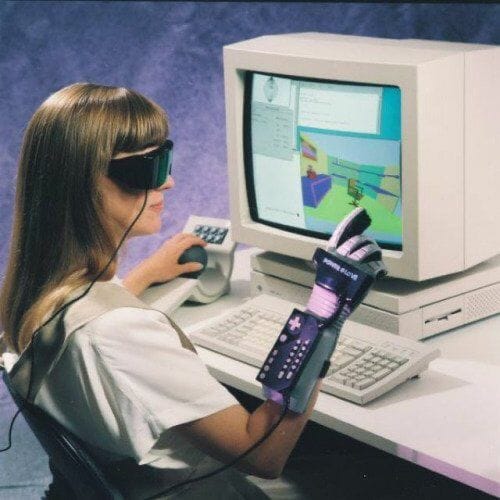
Previously, we accessed artificial intelligence through a browser. In 2026, this model is obsolete. More than half of new personal computers now come equipped with dedicated neural processors.
Artificial intelligence is now embedded in devices – a significant change over the past decade! This progress raises many questions. For example, what can AI generate now, and who controls the intelligence embedded in devices?
Edge vs. Cloud: From Rented Intelligence to Embedded Agency
Cloud AI defined the early 2020s. It scaled rapidly because it centralized power: large models ran on hyperscale infrastructure, and users accessed them through thin clients. Data left the device, latency depended on network conditions, and usage was paid. Modern PCs now dedicate silicon space specifically to NPUs optimized for matrix multiplication. This is the core operation underlying large language and diffusion models. This specialized hardware performs inference with much lower power consumption than GPUs, allowing persistent AI workloads to run on battery-powered devices.
The practical effects are immediate:
- Voice commands execute without network delay.
- Meeting summaries are generated offline.
- High-resolution image generation runs locally.
- AI agents operate continuously without draining power.
Latency is reduced to virtually zero. More importantly, sensitive data no longer needs to leave the device to be useful to the AI system.
These changes have political implications. When data inference happens locally, dependence on centralized cloud providers weakens. Enterprises reduce API spending. Governments regain leverage over digital infrastructure. Developers gain new design freedoms. Legal firms can deploy local models that index contracts without routing data through third-party APIs. Creative software can run generative tools entirely offline. Startups can ship AI features without building their margins around per-token cloud billing. Local inference is not anti-cloud – but it redistributes power. Cloud providers remain important, yet they are no longer the mandatory gatekeepers between user data and intelligence.
The NPU Arms Race: Intelligence as a Hardware Standard
The mainstreaming of AI PCs is built on competition at the silicon layer. Dedicated NPUs delivering 40, 50, even 80 TOPS are no longer experimental – they are baseline expectations for premium machines. The industry focus has shifted from core counts and clock speeds to a new metric: how many model parameters can a laptop process per second without thermal throttling. A premium device is no longer defined by gaming performance or rendering speed. It is defined by its capacity to host persistent AI agents.
In 2024, generative AI meant asking for output. In 2026, AI runs continuously in the background. It watches context, parses workflows, anticipates intent. It indexes local files, manages inboxes, drafts replies, coordinates applications. This is the transition from Generative AI to Agentic AI. The hardware arms race reflects this. Silicon vendors are no longer selling faster chips; they are selling autonomy. The NPU becomes a guarantor of independence – from network instability, from usage-based billing, from centralized moderation pipelines. The PC regains its original ethos: self-contained capability.

Software Ecosystems: The Rise of the NPU-First Stack
Hardware alone does not define a paradigm. Software ecosystems do. The decisive development of 2026 is that major software vendors have adopted a local-first architecture. Generative image editing, transcription, summarization, and document intelligence increasingly default to on-device execution. Creative tools now process sensitive assets offline. Enterprise workflows integrate AI features without routing proprietary data through external APIs. Developers optimize applications specifically for NPU acceleration.
This creates a feedback loop:
- NPUs become standard.
- Software assumes their presence.
- Legacy hardware becomes second-class.
- Consumers are incentivized to upgrade.
An “AI divide” is emerging. Users with pre-NPU machines experience degraded functionality, higher latency, and higher cost. Those with AI PCs gain smoother, cheaper, and more private access to advanced features. The ecosystem is converging around a new assumption: AI acceleration is as fundamental as graphics acceleration once was. Yet fragmentation remains a risk. Unlike CPUs and GPUs, NPUs lack a universal operating abstraction. Toolchains exist, but no unified “AI OS” standard treats neural hardware as a first-class citizen across platforms. Whoever solves this orchestration layer, seamlessly managing CPU, GPU, and NPU workloads, will shape the next decade of computing.
New Business Models: The Erosion of Token Economics
Local inference disrupts monetization. Cloud AI popularized pay-per-token pricing. Intelligence became a metered commodity. For startups and enterprises alike, usage costs scaled unpredictably. When core AI tasks run locally, this model weakens. The value shifts from inference access to:
- Model updates and optimization
- Enterprise fine-tuning
- Secure orchestration layers
- Federated learning frameworks
- Specialized agent marketplaces
We are witnessing a move from API economics to architecture economics. Instead of paying for every prompt, organizations invest in hardware capabilities and local optimization. Instead of renting intelligence, they own execution environments. Fleets of AI PCs are improving shared internal models without transmitting raw data externally. Enterprises can refine AI systems around proprietary workflows while maintaining data sovereignty. The economic logic becomes clear: capital expenditure replaces variable cloud expenditure. Intelligence becomes an asset, not a subscription line item.
Privacy and Control: Decoupling Intelligence from Surveillance
The most consequential impact may be psychological. In the early generative era, users faced a paradox: AI was powerful but invasive. To gain intelligence, they had to relinquish data. Embedded local AI decouples those variables. A personal assistant can now index a lifetime of documents, messages, and images without uploading them to third-party servers. Sensitive sectors – healthcare, legal, finance – face fewer regulatory barriers when inference is local. However, sovereignty introduces new risks. Without centralized safety filters, highly realistic synthetic media can be generated entirely offline. The locus of responsibility shifts from platform operators to device owners. Governance frameworks designed for cloud moderation struggle in a local inference world.
Toward the 100-TOPS Horizon: World Models and Physical Context
The next threshold is already visible: 100 TOPS and beyond. As NPUs grow more powerful, AI moves from static text and image generation to multimodal world modeling. Real-time video interpretation, spatial reasoning, and augmented overlays become feasible locally. Imagine a student solving equations on paper while their laptop provides contextual guidance through augmented reality. Or an engineer receiving real-time workflow suggestions as code is written – all processed on-device. When multimodal agents operate locally, the boundary between digital and physical contexts blurs. The laptop ceases to be a tool and becomes an ambient collaborator.
A New Architecture for a New Era
Embedding neural silicon into consumer devices redistributes power across the technology stack. It reduces latency and cost, strengthens privacy, reshapes business models, and redefines what “personal computing” means. The cloud does not disappear. But it is no longer the sole locus of intelligence. For Metatalks’ audience, founders, builders, and architects of decentralized systems the message is clear: local AI aligns with broader movements toward autonomy and distributed control. The PC has become personal again – not because it is smaller or faster, but because it thinks for itself. And once intelligence is embedded, there is no returning to a rented mind.