
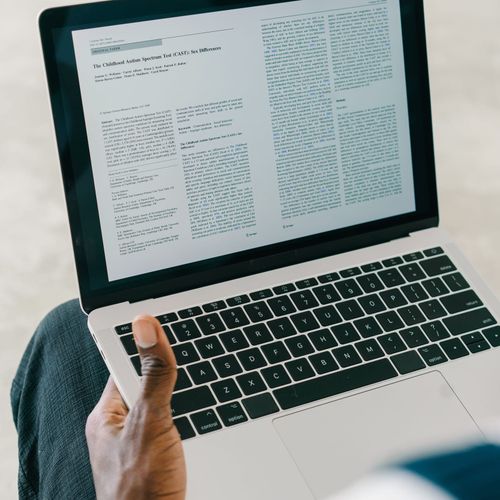
AI agents do the conversion themselves and test the tools against the paper's published results before a scientist ever asks a question.
Stanford researchers have built a tool called Paper2Agent that turns a published research paper into an AI agent. Jiacheng Miao, James Zou and colleagues described it in Nature on September 16.
The system reads a paper's text, code and data, and a group of agents writes tools that carry out its methods, testing each one against the results the paper reported. Tools that pass are packaged into a server an AI assistant connects to, and a researcher asks in ordinary language for a method to be run on their own data. Its code is on GitHub.
In the team's own evaluation, 74 of 100 computational-biology papers converted. Conversion means the code could be extracted, run and validated without a person stepping in; it carries no verdict on whether the science holds.
The rest failed on missing code, missing data or model files, dependency problems, and scripts that would not generalize. Chenhao Tan, an AI researcher at the University of Chicago, says the attempt also surfaces plain mistakes an author had not noticed, such as inconsistent data or missing code.
AlphaGenome is a model of how changes in DNA affect processes such as gene expression. In one demonstration the team built an agent from its paper and asked which gene explains a single-letter variant's link to LDL cholesterol. It pointed to SORT1, where the original paper had emphasized CELSR2 and PSRC1; Zou says the variant data support both.
The same agent answered questions drawn from the paper's own tutorials almost without error; on 30 open-ended research questions it was right about 83% of the time. Zou told Stanford Medicine that a manuscript does not capture failed experiments or the judgment calls behind a design, so authors still have to supply that by talking to their own agent.