
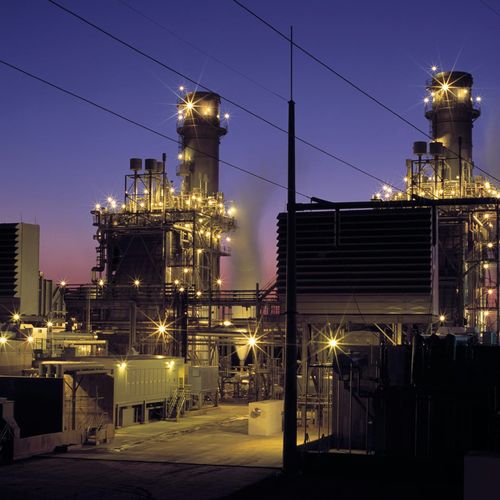
Fuel is about half the cost of power from a big plant — and futures currently price in no such move.
Noreva, a firm that researches energy markets, projects that natural gas could reach three times its current price in certain U.S. regions over the next several years, climbing past $10 per million BTUs at some hubs — the delivery points where futures contracts are settled.
The fuel trades today between roughly $2 and $4.50 per million BTUs, and Henry Hub in Louisiana, a heavily traded benchmark, stands a little below $3.
At double or triple today's prices, AI data centers that generate their own power would be far costlier to run, because fuel is roughly half of what electricity from a big power plant costs. That cost could surface in the price of a token, or push hyperscalers onto the grid instead, driving electricity prices up.
The exposure is large and newly taken on. Amazon, Google, Meta and Microsoft spent much of the past decade buying solar and wind projects, and are now wagering on gas to fuel the data centers behind their AI plans. Meta announced in March a 7.5-gigawatt gas plant in Louisiana to supply its Hyperion data center; within days, Google and Microsoft each announced gigawatt-scale gas plants of their own in Texas. Amazon intends to build a 7.6-gigawatt plant, also in Texas.
Companies that historically avoided large capital expenditures are now pouring money into physical infrastructure, and into energy markets they know less well. Noreva chief executive Peter Gardett told TechCrunch that everyone in those markets has drifted into a comfortable assumption that gas prices have nowhere to go but sideways or down. At least one investor he spoke to was taken aback by the scale of gas price exposure hyperscalers are willing to accept, he said, and their behavior departs from what an off-taker would normally do.
Gardett expects energy companies to keep adding supply, though not at the pace they once did, and new wells cost more to drill — by itself, he said, none of that would alter the economics. What does move the number is the domestic gas market finally being linked to the global one, together with the demand AI is pulling in.
West Texas shows how that repricing would work. Most of the wells there were sunk in pursuit of oil, and the gas that came up alongside it was a byproduct nobody much wanted; with no large pipelines to move it out of the region, producers unloaded it cheaply on anyone who could use it. Pipelines have finally been built, Gardett said, and much of that gas is now headed for export markets. He expects places awash in gas sitting beside places with none, and those gaps holding prices in certain regions above $10 per million BTUs for long stretches.
Nothing in the market currently anticipates that: as far ahead as anyone can see, futures contracts price in no dramatic moves. Gardett called that a not unreasonable bet, while adding that he doubts the market has it right.
He expects the question to surface on Alphabet earnings calls to come, where the company will be discussing how natural gas prices track with Google's results — an odd situation, he said, but the one that now exists.