
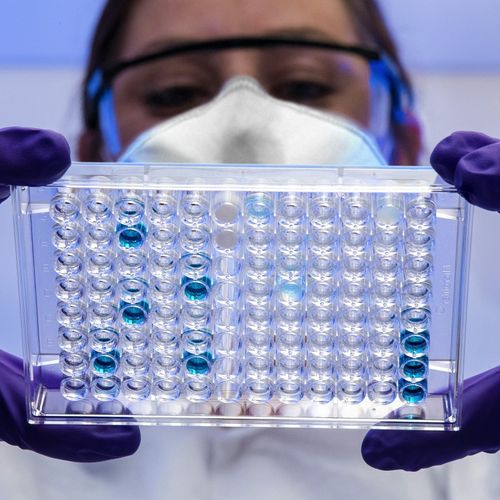
The model is built to predict how cells respond to drugs, and for now only scientists in a new fellowship program and selected partners can use it.
Microsoft Research has introduced Quine, which combines a model trained jointly on gene, protein, cell and imaging data with software that links it to lab tools, the scientific literature and the researchers using it. Microsoft wants the model to predict how a biological system will change in response to an intervention, such as a drug, before it is tried in the lab.
The example Microsoft describes involves pancreatic ductal adenocarcinoma, the commonest type of pancreatic cancer, which Microsoft calls among the hardest to treat. Its tumor cells can switch between states that differ in how they respond to treatment, and Microsoft and the Broad Institute of MIT and Harvard have studied these states for years in cells taken from patients. Quine ranked thousands of compounds by how likely each was to move cells from one state to another.
In lab tests of the shift from a state known as classical to one known as basal, the compounds Quine ranked highest moved the cells furthest, Microsoft says. It adds that narrowing the list to a handful of candidates for the lab took one weekend.
The system also predicted that several compounds would push cells toward a distinct third state, which the researchers had not fully expected. Microsoft says the lab confirmed this, as it did the system's forecast that the reverse shift, from basal back to classical, would be harder.
Microsoft's announcement gives no figures, neither how many compounds reached the lab nor how large the effects were. The lab work was done with the Broad Institute, Microsoft's research partner of several years.
Microsoft describes Quine as a research tool not meant for clinical use. Only fellows and selected research partners can use it for now, and the company says it expects to widen access later through its products. Applications for the fellowship are open until November 2 to PhD candidates, postdocs and other researchers; the 16-week program, hosted by Microsoft Research in Cambridge, Massachusetts, starts in June 2027.