
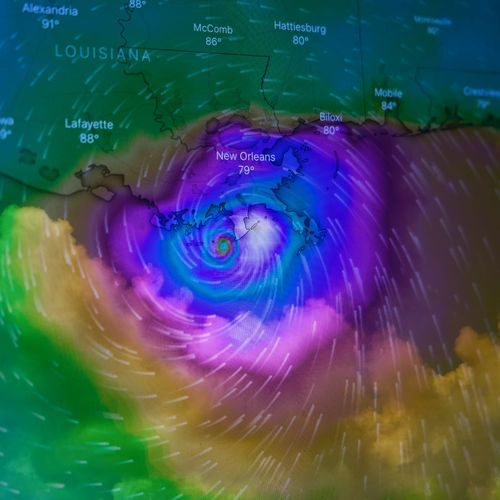
The authors put that gain — on forecasts of where a storm travels, how strong it gets and how large it grows — on the scale of everything the previous decade of operational cyclone forecasting delivered.
A cyclone model built by a team whose lead authors are based at Google DeepMind in London averaged a day or more of extra warning time over the best operational forecasting systems when it was tested on tropical cyclones that occurred between 2023 and 2025, Nature reports.
The system, WeatherNext Cyclones (WN-C), issues probabilistic ensemble forecasts of where a tropical cyclone anywhere on the globe will travel, how strong it will get and how large it will grow. The paper, published on 6 August 2026, carries co-authors from Google Research, the National Hurricane Center and the UK Met Office among others.
Two ingredients went into training WN-C: analyses of weather across the whole planet, and a worldwide archive of past tropical cyclones. From those it produces many-member ensembles of plausible global weather and cyclone outcomes reaching 15 days ahead, and its scalability allows ensembles of up to 1,000 members, which capture rare events better than the conventional 50. Folding WN-C's forecasts into a consensus ensemble whose members are averaged with weights raises that ensemble's skill markedly, the paper also reports.
What feeds the model is comparatively crude — coarser in resolution, by orders of magnitude, than what regional weather models rely on. The team takes that to mean fine resolution is not strictly required to forecast cyclone strength at this level of accuracy: lower-resolution atmospheric data, they argue, carries more information about intensity than had been appreciated.
The researchers cast the model as ensemble guidance handed to human forecasters for operational use, and as a leap toward cyclone forecasts and alerts that arrive sooner and can be trusted more — which, on their account, could save lives and lessen the damage cyclones do. The measured basis for that case remains what the 2023–2025 evaluation recorded: a day or more of extra warning.