
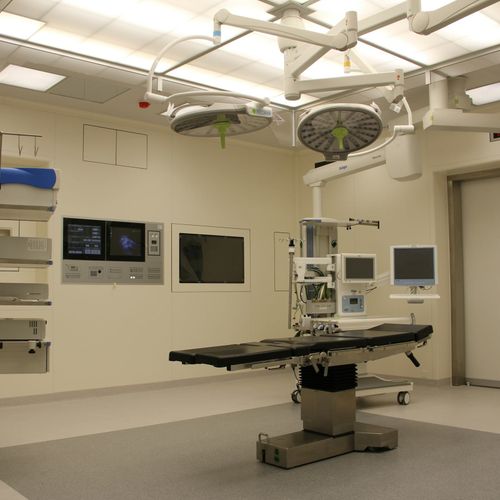
Four arms coordinate by software and fold under the table, a layout J&J says needs less operating-room space; the robot is authorized first for general-surgery procedures.
Johnson & Johnson MedTech has won de novo clearance from the FDA for Ottava, its surgical robot, and pulled the wraps off the long-awaited platform.
What separates Ottava from mounted rivals is where its arms live. Rather than hang from booms or ride on carts, the four robotic arms are built into the operating table itself and fold away underneath it when idle. The company casts it as the first soft-tissue robotics system anywhere to be embedded in the table.
Software, motors and sensors work the four arms in concert, so the setup can move into preset procedural positions at a single button press. J&J says putting the robot inside the table frees up floor space, occupying 30-50% less room in the operating theatre than surgical robots fixed to booms and carts.
The company also says it reworked the instruments used most often in robotic surgery, pointing to surgeon surveys it cited. In one, 83% said they had made at least one accidental suture cut each month, which J&J answered with a combined needle driver that offers a surgeon-triggered cut-only mode and a suture-only mode. In another, 98% said their monopolar scissors were blunt or cut poorly, prompting a patented scissor design meant to hold the blades in alignment so cuts stay consistent.
Ottava's first clearance covers general surgical procedures, among them gastrectomy, appendectomy, cholecystectomy, gastric sleeve, hiatal hernia repair and Roux-en-Y gastric bypass.
The claims about space, workflow and the reworked instruments come from J&J itself, not from independent testing.