
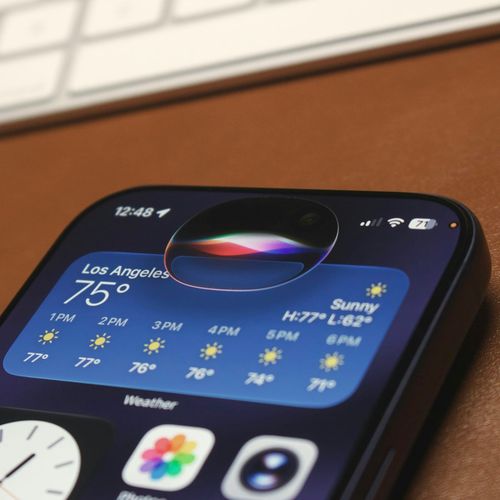
To handle requests inside apps, Siri AI searches a person's messages, email and photos or reads what is on the screen.
iOS 27 and Apple's other software updates, released on September 14, have Siri AI as their main feature. The company first promised the rebuilt assistant in 2024 and then postponed it several times.
Answers can continue as a conversation, and a standalone Siri app keeps earlier chats. Outside Apple's own software, Siri AI can already send a WhatsApp message, and Apple says support for Microsoft Outlook is coming soon.
The iPhone Camera app gets its own Siri mode, which can turn the set times on a festival poster into calendar events. In beta testing, a TechCrunch reviewer asked Siri to add coffee roasters spotted on Reddit to a specific note and struggled to get them into the right one. Giving the note a simpler name made the results more reliable.
Apple developed the models behind Siri AI with Google, building on its Gemini models. They run on the device and on Apple's Private Cloud Compute servers, which Apple says keep no personal data and let no one, the company included, see it.
A developer known as pdfu found private hooks in iOS 27 and macOS Golden Gate that let other companies' AI models plug into Siri. In Mac demos, Claude worked as a Siri extension.
A separate extension sent Siri's requests to GPT-5.6 instead of Apple's cloud model. GPT-5.6 could then request actions, read the personal data they returned and answer in Siri's voice. Apple has not made either integration available to users or opened the hooks to third-party developers.
Siri AI needs an iPhone 15 Pro or 15 Pro Max, any iPhone 16 or newer, or an iPad or Mac with an M1 chip or later, and a few other Apple devices support it too.
It launches as a beta in English only, with French, Japanese, Korean, Portuguese and Spanish due in October. In the EU, Siri AI and the features built on it are initially missing from iOS, iPadOS and watchOS. China gets none of the new AI features for now, which Apple puts down to regulatory requirements.
Siri AI and other features that rely on Apple's servers also have daily usage limits that shift with the feature and with demand, and Apple says expanded access will eventually cost extra.