
The owner of an instrument writes a plain-language account of it, and the standard renders that into a reference file the agent reads to work out how the device is run.
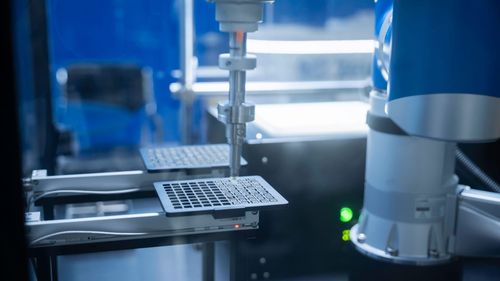
Anthropic has released the Model Hardware Standard in research preview: one shared set of device drivers for physical equipment — robotic arms, microscopes and other laboratory and factory instruments that until now had to be driven by code written for each device.
The account covers what the device can measure, what can be adjusted and what safety limits hold. Anthropic says setting a piece of equipment up this way is a job of hours or minutes, against the weeks or months of custom integration work it replaces.
Alek Kemeny of Anthropic’s technical staff traced the idea, in a video accompanying the announcement, to a visit to the HHMI Janelia Research Campus. There the neuroscientist Arco Bast was running a memory experiment on a rig whose lasers, microscopes and cameras he had brought under a single point of control.
The standard has no AI in it: hardware attached to it can be driven from commands typed at a terminal. A model reaches the equipment over a separate connection, through Anthropic’s Model Context Protocol, and that link is what lets researchers work with laboratory hardware in everyday language rather than by writing bespoke code.
In one trial, Anthropic says, Claude worked out how to align a laser by itself, making an adjustment, watching through a camera what the adjustment did, and going again until it succeeded. It then packaged what it had learned into a script that did the same job in a single pass, with no reasoning at each step.
Tecan, QIAGEN and AWS are working with Anthropic on the standard, and Hugging Face and Raspberry Pi are building it into hardware they sell. An open-source release of the specification is planned, though Anthropic has attached no date to it.