
Anthropic's head of life sciences says it will do preclinical work that established drug companies do not find financially attractive, and will stay out of clinical trials for now.
Anthropic has built a wet lab, a laboratory for physical biology experiments, in the San Francisco Bay Area, Reuters reported, citing two people familiar with the matter. Eric Kauderer-Abrams, Anthropic's head of life sciences, confirmed in an interview that the company runs it. A spokesperson said it is not specifically for drug discovery and declined to elaborate.
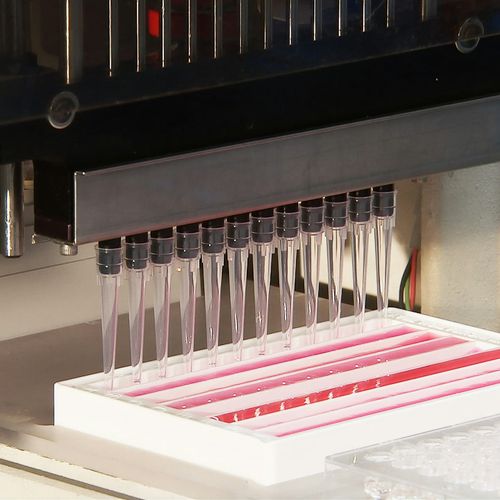
Like many biotech firms, the company is automating physical tasks, the two people said. One of them said Anthropic wants to see how far Claude can steer robots through experiments with little human involvement. A spokesperson said people have to stay involved and watch over the work for it to be safe. Kauderer-Abrams called AI-run lab work very early.
He told Reuters the company wants its own lab capacity for speed and for firsthand experience of biology, while it still contracts work out where that is more efficient. By staff and resources, life sciences is already one of Anthropic's largest investments.
At a June event in San Francisco, Kauderer-Abrams said Anthropic would work on early-stage research in areas the big drug companies have little appetite to fund. Anthropic has said it wants to open the way to rare-disease treatments. For now it is staying out of clinical trials, the human-testing stage that can add years before a drug is approved. He said that is partly to avoid competing with the companies that bring drugs to market.
Those firms are also its customers. Anthropic sells AI tools to Genentech, Bristol Myers Squibb and Novo Nordisk. The same two people said those customers may worry it learns from their drug programs, even though their data is walled off.
Kauderer-Abrams thinks AI could speed up work on conditions long written off as "undruggable". Which ones Anthropic is working on, and how far it has gotten, is unclear.